

Successfully hiring a keynote speaker: 7 steps to success

Have you ever wondered what exactly happens behind the scenes before a keynote speaker takes the stage? Choosing the right speaker is just the beginning. There are a wealth of decisions and steps that need to be carefully planned and executed to make your event a resounding success.
In a previous blog post, I explained how to find the right keynote speaker for your event, including how to align them with the event’s goal and target audience. However, many of you have asked me what the practical process looks like from booking to performance. This article focuses on the key technical aspects that need to be considered in order to successfully hire the perfect speaker.

1. Define the event’s theme
Before a speaker can be booked, you need to find the right keynote speaker. There are many criteria to consider, but you should start with the core message of the keynote. What values should the person you entrust with your stage and your audience convey? Only when the event’s theme is clear and you know what core messages you want your audience to take away can you start looking for the right keynote speaker.

2. Research potential speakers
You can use tools such as Google search, inquiries within your network, or personal impressions you have already gathered from various speakers at other events. Important criteria for selection include expertise on your chosen topic, their impact on the audience, a professional yet inspiring demeanor, and, of course, your budget.
Important criteria for selection include expertise on your chosen topic, their impact on the audience, a professional yet inspiring demeanor, and, of course, your budget. Share on XWhile you can best judge the suitability of a keynote speaker based on personal impressions, video recordings of speakers that you find online can also help you assess how they come across to an audience. Last but not least, references such as testimonials and Google reviews are also good indicators of how professional a keynote speaker is. You can also browse online speaker agencies to find the perfect speaker for your topics.

3. Making contact
The third step, making contact, marks the beginning of the technical “hire a keynote speaker process”. Once you have identified your desired speaker, you should contact him or his agency. In my case, you can contact me directly via my contact form or by email. Like many other speakers, I am represented exclusively by a speaker agency in German-speaking countries.
When you make an inquiry, you should already have some important information at hand: the date of the event, the location of the event, the size and topic of the event, and your budget. The duration of the keynote speech – usually between 30 and 60 minutes – and whether there will be a Q&A or an autograph session with the audience afterwards should also be clarified in advance during the event planning stage. Based on this information, it is already possible to reach a basic agreement and make a binding booking.
By the way, talking about the budget and keynote speaker cost. How much does it actually cost to hire a keynote speaker as the highlight of my event? Various factors such as experience and reputation play a major role here. Published experts, possibly even with a best-selling book under their belt, usually cost more. The lowest limit for a keynote speaker starts at $3,000 on an almost open upward scale. With a best-selling author, we quickly reach five-digit numbers, while well-known personalities can easily charge a six-figure sum for the entire experience. While specialist knowledge and expertise are a given, it is often personal insights that create a very special atmosphere in keynotes.n.

4. The preliminary meeting
About one to two weeks before your event, a preliminary meeting will be held to prepare the content of the presentation. Each top keynote speaker has a certain repertoire of rehearsed presentations – known as keynotes.
The preferred topics I can speak about as an expert are “The stadium principle: winning together,” “The fan principle: how to turn your customers into fans,” and “The marathon principle: peak performance when it counts.” So it’s about motivating employees, turning customers into fans and getting the best out of yourself at the decisive moment. As I also work as an event host for sporting events, I like to draw inspiration from parallels with sport because I know how important enthusiasm is there and how it works.
However, the keynotes should be tailored to your event and your audience so that they feel individually addressed. It’s less about redesigning a presentation and more about fine-tuning certain details. Part of this involves identifying the exact target audience and the message you want the keynote to convey. In my case, I like to ask for some background information during the initial discussion so that I can tailor the presentation to your team or audience as best as possible.
Last but not least, the preliminary discussion should clarify who will announce the keynote speaker and how. The introduction is a very important part of the speaker’s success. In addition to pure facts about the speaker, it is important to build a bridge to the event and answer the question: Why did we choose this particular keynote speaker for the audience?
Optionally, it can make sense to invite the speaker to be part of the event or a joint meal beforehand. I have often learned valuable things during dinners with the team that I have incorporated into my keynote speaking the next morning.

5. Technical check
Now we come to a few aspects that are basically self-evident. But sometimes they are forgotten, even though event planners can easily influence these points. Shortly before the event, a technical check should be carried out to make sure everything is working properly. Projector, microphone, sound, lighting, etc. Many speakers bring their own laptop and work with slides that often contain multimedia elements such as songs or videos. The projector should have an HDMI port and be able to project a 16:9 image onto the screen. At the same time, it should be possible to establish an audio connection between the laptop and the sound system. Most professional speakers prefer to use a headset rather than a handheld microphone, as this restricts body language.
The lighting should ensure that there is sufficient image contrast on the screen and that there are also options for illuminating the audience so that the speaker can interact with them. There should be enough space on stage to allow the speaker to move around without risking obscuring the slides with the light from the projector. A glass of still water within easy reach is also a welcome refreshment for every speaker’s voice.
6. The introduction
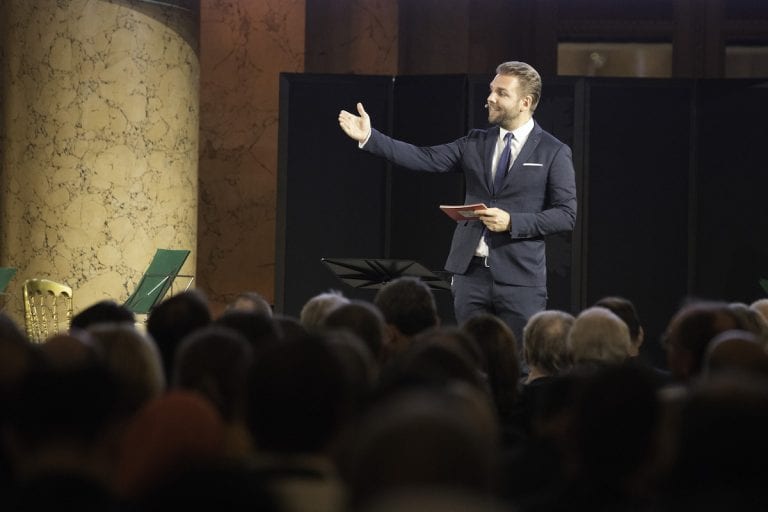
As already discussed in the preliminary meeting, the big moment for the introduction has now arrived. The following applies here: At smaller company events, the professional speaker is often introduced before their speech by the event organizers – at larger events, this is often an external host. The introduction is not intended to present a complete CV of the speaker, but to establish a connection to the event in order to engage the participants. The aim or purpose of the event should also be briefly mentioned again. It is important to make it clear why exactly this person here is now the perfect keynote speaker and what his keynote address means for the target audience.
7. The presentation
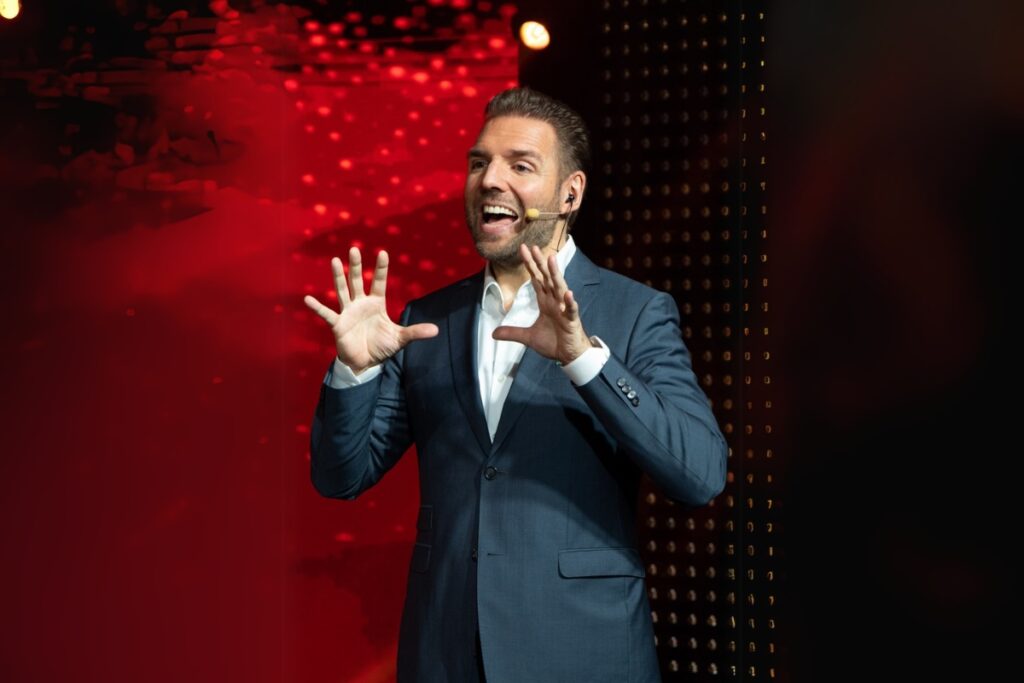
Up to this point, as the event planner, you have been able to influence all the essential steps in the preparation and execution of your event. But as soon as the microphone is switched on, you place the success of the event in the capable hands of the keynote speaker. If you have done your homework, you can now look forward to a fireworks display of storytelling and entertainment. Just sit back and enjoy.
For a successful keynote: How to book the perfect keynote speaker
A top keynote speaker can make or break the quality of your event. That’s why it’s important to – based on the event’s purpose – first decide on the topic of the keynote and only then start looking for potential speakers. From booking the right speaker to the presentation itself, there are a number of steps to consider. These include agreeing on the content, but also a number of technical event details. If you are already planning your next event with a keynote speaker and have carefully read through the 7 steps, feel free to inquire directly—top keynote speakers are quickly booked up. Why not start with an inquiry right away?






 Contact


